No products in the cart.

How to Shop Premium Dresses Online With Confidence
A friend of mine spent three weeks scrolling through dress after dress last winter, added twelve to her cart, and bought none of them. Not because she couldn’t find anything nice. Because she had no real way to tell which ones would actually look good on her, fit properly, or survive more than two washes. That’s the strange thing about online shopping for clothing right now. There’s more choice than ever and somehow less clarity. If you want to buy premium dresses online without second-guessing every click, you need a system, not just good taste.
This blog walks through what actually matters when picking dresses on the internet, what most guides conveniently skip, and how to shop like someone who’s done this a hundred times, even if it’s your first.
Why Fit Information Comes First
Fabric photos look great. Filters make everything look flattering. None of that tells you how a dress sits on your actual body.
Before anything else, check the size chart against a piece of clothing you already own and love. Not your aspirational size. The one that fits you right now, today, comfortably. Measure the bust, waist, and length of that garment with a soft tape and compare it directly to the brand’s chart in centimeters, not just S/M/L labels, because those vary wildly between brands.
A well-cut dress from a brand that takes tailoring seriously will list actual body measurements, not just generic sizing. If a product page only says “true to size” with no numbers attached, treat that as a small red flag. It usually means less attention was paid to fit engineering than to marketing copy.
What Premium Actually Means Here
The word gets thrown around loosely. Premium doesn’t have to mean expensive for the sake of it. It should mean the construction, fabric, and finishing hold up to scrutiny.
Look closely at product photos for these three things:
- Stitching detail at seams, hems, and closures, since loose or uneven stitching in zoomed photos usually means the same in person.
- Fabric weight description, because a dress that drapes well typically lists fabric composition clearly instead of vague terms like premium blend
These two checks alone filter out a huge chunk of low-effort listings dressed up with nice photography and nothing underneath.
Reading Between the Lines of Product Descriptions
Good product copy tells you what the dress does, not just what it looks like. Does it have side slits for movement? Is the closure a hidden zip or a tie? Can it transition from a desk to dinner without a full outfit change?
This matters more for premium dresses for women shopping for versatility rather than single-occasion pieces. A midi dress that photographs beautifully but only works for one type of event isn’t really premium in the practical sense. It’s decorative. The better brands write descriptions that anticipate your actual day, mentioning things like breathability, structure, and where the silhouette sits on different body types.
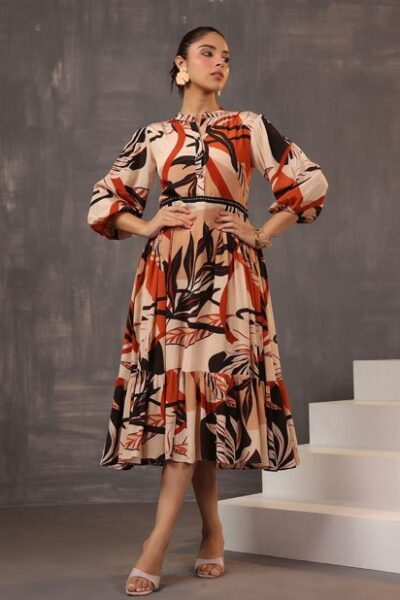
I have noticed brands with strong tailoring backgrounds tend to describe garments almost like a fitting room conversation. Long sleeves for a refined line here, an adjustable tie there. That level of specificity usually signals someone actually designed the piece with wear in mind, not just aesthetics.
The Rise of Contemporary, Not Just Ethnic or Fast Fashion
Something interesting has been happening in Indian fashion retail over the past couple of years. Search interest in contemporary dresses women India has climbed steadily, and it’s not just a keyword trend. It reflects a real shift in what women want from their wardrobes.
For a long time, online shopping for women in India split into two lanes. Ethnic wear on one side, fast fashion basics on the other. The middle ground, sharp Western silhouettes that still feel considered and durable, was thin. That gap is finally closing, with more brands designing specifically for women who want structure without stiffness and versatility without looking generic.
This shift matters for shoppers looking to buy women’s clothing online India because it means better options now exist for office-to-evening pieces that do not scream cheap synthetic fabric the moment you touch them. Fit-and-flare midis, tailored shirt dresses for women, co-ord sets that double as separates. These are becoming genuinely well-made rather than trend-chasing knockoffs.
Trust Signals Worth Actually Checking
Anyone can slap premium on a product title. What separates a trustworthy store from a risky one usually comes down to a handful of concrete details, and this is where a little bit of patience saves you a lot of regret.
Check the return window length and whether it’s genuinely enforced, not buried in fine print designed to discourage claims. Look at whether the brand shows multiple angles of each piece, including how it moves, not just a single flat front shot. Read the fabric care instructions closely too, since a dress that demands dry cleaning only might not suit your lifestyle even if the design is perfect.
Payment flexibility matters more than people admit. Multiple payment options and clear shipping timelines tend to correlate with brands that have their operations sorted, which usually extends to product quality too. It’s not a guaranteed rule, but it’s a reasonably reliable pattern after enough purchases.

A Quick Pre-Purchase Checklist
Before adding anything to cart, run through this short mental list. It takes under two minutes and saves the return-shipping headache later.
- Compare the size chart to a garment you already own, in exact measurements
- Confirm fabric composition and weight are listed, not just described vaguely
Small habits like this compound. After a few purchases done this way, you start recognizing which brands consistently deliver what they promise in photos, and which ones rely on styling tricks that do not survive real daylight.
Conclusion
Dress shopping right online really comes down to a few habits: checking real measurements instead of trusting size labels blindly, reading fabric details instead of skimming past them, and paying attention to how a brand describes fit and movement, not just how the photos look. None of this takes much extra time once it becomes routine, and it saves you from the return-and-reorder cycle that makes online shopping frustrating in the first place.
The women who shop smart are not the ones with the most patience. They are the ones who know exactly what to look for before they hit add to cart. That’s really the whole difference between guessing and shopping with confidence.
Cavenor designs every piece with that same attention to fit, fabric, and everyday versatility, so the confidence starts well before checkout.
Frequently Asked Questions
How do I know if a dress will fit before buying it online?
Compare the brand’s size chart measurements directly against a similar garment you already own, focusing on bust, waist, and length in exact units rather than relying on S/M/L labels alone.
What makes a dress qualify as premium quality?
Clear fabric composition, visible stitching quality in product photos, considered design details like adjustable closures, and honest sizing information are stronger indicators than price alone.
Are contemporary dresses different from ethnic or fast fashion pieces?
Yes, contemporary styles typically focus on tailored silhouettes and versatile design meant for both work and casual settings, sitting between traditional ethnic wear and mass-produced fast fashion in both construction and intent.
What return policy details should I check before purchasing?
Look for a clearly stated return window, information on who covers return shipping costs, and whether the policy applies to all sizes and colors, not just select items.