No products in the cart.

How to Choose Office Shirts That Match Every Bottom in Your Wardrobe
Monday morning, seven minutes before you need to leave, and you’re staring at three shirts that somehow do not go with a single pair of trousers you own. Sound familiar? Most working women hit this wall not because they lack clothes, but because they never built a shirt wardrobe with mixing in mind. Every piece was bought on its own, for its own moment, and none of them were ever meant to talk to each other.
This is exactly where a smarter approach to office dressing pays off. If you are looking to buy office shirts for women that actually work with everything else hanging in your closet, the trick is not buying more. It’s buying with intention. By the end of this, you will know which shirt silhouettes pair with which trousers, what fabric combinations hold up through a full workday, and how to stop treating your wardrobe like a pile of unrelated purchases.
Why Matching Actually Matters
A shirt that looks sharp on a hanger can buy women’s formal pants online with the wrong bottom. Boxy cuts drown under wide-leg trousers. Fitted, structured shirts can look stiff with anything too casual. The relationship between top and bottom decides whether an outfit reads polished or just thrown together.
Fashion retail data backs this up too. Reports on wardrobe usage consistently show that most women wear less than half their closet on a regular basis, mainly because pieces do not combine well. That’s not a shopping problem. That’s a planning problem, and it’s fixable.
Start With Shirt Silhouette
Before color or print, silhouette decides compatibility. A shirt’s cut tells you almost everything about which trousers it’ll flatter.
Structured, collared shirts with a slightly boxy or straight fit work best with tailored, straight-leg trousers. The clean lines on both pieces mirror each other, which is why this combination never really goes out of style in office settings.
Relaxed or asymmetric shirts, the kind with side ties or draped fronts, need a bottom with more structure to balance them out. Pair these with fitted or slim trousers so the outfit does not end up looking like two loose pieces competing for attention.
Fitted, tucked-in shirts are the most flexible of the three. They work with wide-leg trousers, straight cuts, even a pencil skirt if you are stepping into a client meeting. When in doubt, a fitted shirt is your safest bet.
Fabric Weight Changes Everything
People overlook this constantly. A crisp cotton satin shirt paired with heavy wool trousers can feel unbalanced, almost like you got dressed in two different seasons. Match fabric weights where you can. Lightweight linen or cotton shirts sit naturally with lighter trouser fabrics, while structured shirting fabric holds its own against slightly heavier bottoms.

Building a Bottom Wardrobe That Works
This is the part most people skip. You can own ten great shirts, but if your trouser collection is random, nothing will click. When you decide to buy women’s formal pants online, think about versatility before trend.
A good base includes:
- One pair of straight-leg trousers in black or navy, since these anchor almost any shirt style you own
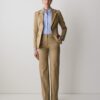
- One pair of tailored formal trousers for women in a neutral tone like beige or grey, which softens sharper shirt silhouettes
- One slightly wider or relaxed cut for days when you want comfort without losing the formal look
That’s really the core of it. Everything else, prints, colors, seasonal pieces, sits on top of this foundation.
Color Pairing Without Overthinking It
Color rules in office wear do not need to be complicated. Neutral trousers, black, navy, grey, beige, are the safest match for almost any shirt color, including prints. If your shirt already has detail (a tie front, a pleat, an unusual collar), let the trousers stay quiet. Save bold trouser colors for plain, simple shirts so one piece isn’t fighting the other for visual space.
A small tip that gets overlooked: undertones matter more than shade names. A warm beige trouser can clash with a cool-toned white shirt even though both are technically neutral. If something feels slightly off in the mirror but you cannot say why, this is usually the reason.
Fit Over Trend, Every Time
Trends shift every season. A shirt that pulls across the shoulders or trousers that bunch at the ankle will undercut even the most expensive outfit. Before buying anything new, check three things: shoulder seam placement, how the fabric sits when you sit down, and whether the trouser length works with the shoes you’ll actually wear to work, not the ones in the product photos.
This is also where trying a few silhouettes matters more than buying multiples of the same cut. Someone with a longer torso might find cropped shirts more flattering with high-rise trousers, while a slightly longer shirt length balances better with a lower rise. There’s no universal answer here, only what sits right on your frame.

A Simple System to Follow
Once you understand silhouette and fabric weight, building outfits stops being guesswork. Here’s a quick way to check any new shirt purchase before it comes home with you:
- Does it pair with at least two trousers you already own, not just the one you’re picturing right now
- Can it move from a desk to a quick client call without needing a full outfit change
If a shirt passes both, it earns a spot in your wardrobe. If it only works with one very specific pair of trousers, it’s probably not worth the price tag.
Conclusion
Matching office shirts with the right bottoms isn’t about owning more clothes. It’s about understanding silhouette, fabric weight, and fit well enough that every new piece slots naturally into what you already have. Get those fundamentals right, and getting dressed on a rushed Monday morning stops being a guessing game. For pieces built with exactly this kind of versatility in mind, Cavenor shirt and trouser collections are designed to work together from the start.
FAQs
What’s the easiest way to buy office shirts for women that go with everything?
Stick to structured or fitted silhouettes in neutral shades first. These pair with the widest range of trousers and skirts, which means fewer wasted purchases later.
Should I buy women’s formal pants online or try them in-store first?
Buying online works well if you already know your rise preference and inseam length. Otherwise, checking fit in person once, then repeating that fit in future online orders, saves time and returns.
How many pairs of formal trousers for women do I actually need for work?
Three solid pairs, one dark neutral, one lighter neutral, and one slightly relaxed cut, cover most office situations without overcrowding your closet.
Can printed shirts still be paired easily with trousers?
As long as the trousers stay plain and match one of the colors in the print. This keeps the outfit balanced instead of busy.